
AI Solution for Indoor Analytics
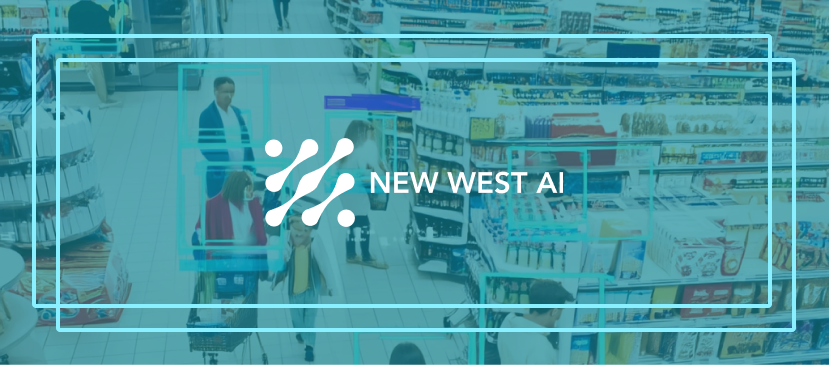
We developed an AI-powered solution for indoor analytics to help improve the efficiency of commercial facilities. The system uses low-level and high-level models to process video frames, detect people, generate skeletal representations and silhouettes, and identify designated areas such as customer queues. The solution was designed to address the computational demands of continuous data processing and analytics, supporting more scalable analysis of activity within commercial spaces.
Challenge
Key challenges included:

Continuous video processing and analytics required significant hardware resources, creating scalability challenges.
Person detection needed a verification step to filter out false positives and improve accuracy, including when processing low-resolution camera footage.
The system needed to determine whether a queue existed based on person detection and skeletal keypoint data, with a separate model for each service shop's queue.
Solution
Business goals:
Two-Level Detection System
Implemented low-level models for person detection and skeletal keypoint extraction, combined with a high-level model for queue classification.
Video Processing for Different Resolutions
Used YOLOv3 for person detection and PoseNet and InceptionV3 for skeletal representation extraction in normal-resolution footage. For low-resolution cameras, proposed classical computer vision methods, including morphological operations, CSRT tracking, and custom post-processing.
Queue Classification
Applied a linear machine learning model to predict queue presence based on low-level model outputs, with an individual model for each service shop and an online-learning process.
Asynchronous Camera Processing
Implemented a scheduler to manage frame processing from multiple cameras, with configurable frame rates and camera parameter optimization.
API and Camera Configuration
Implemented a RESTful service for accessing processed records, managing camera settings, and running or optimizing the models. Added queue-zone labeling, automatic linking of zone boundary keypoints, and polygon-based zone configuration.
Business value
Automated Queue Detection
Enabled the system to identify whether a queue was present based on processed camera footage.
Support for Multiple Cameras
Enabled asynchronous processing of frames from multiple cameras with configurable frame rates.
Configurable Queue Zones
Allowed queue boundaries to be labeled and stored as polygon coordinates, with configurable detection parameters for each camera.
Access to Processed Data
Provided HTTP API access to processed records by timeframe, specific date and time, or the most recently stored observation.
Our success stories
Explore case studies showcasing how we’ve transformed businesses across fintech, healthcare, retail, logistics, and more.
Ready to Transform Your Business?
Get an estimate within 24 hours
Or feel free to contact our team directly at sales@volyatechinc.com
Contact Us
Or feel free to contact our team directly at sales@volyatechinc.com